
Claude Security: A New Era for Swiss SME Security
Discover how Claude Security can enhance the cybersecurity of Swiss SMEs through AI.
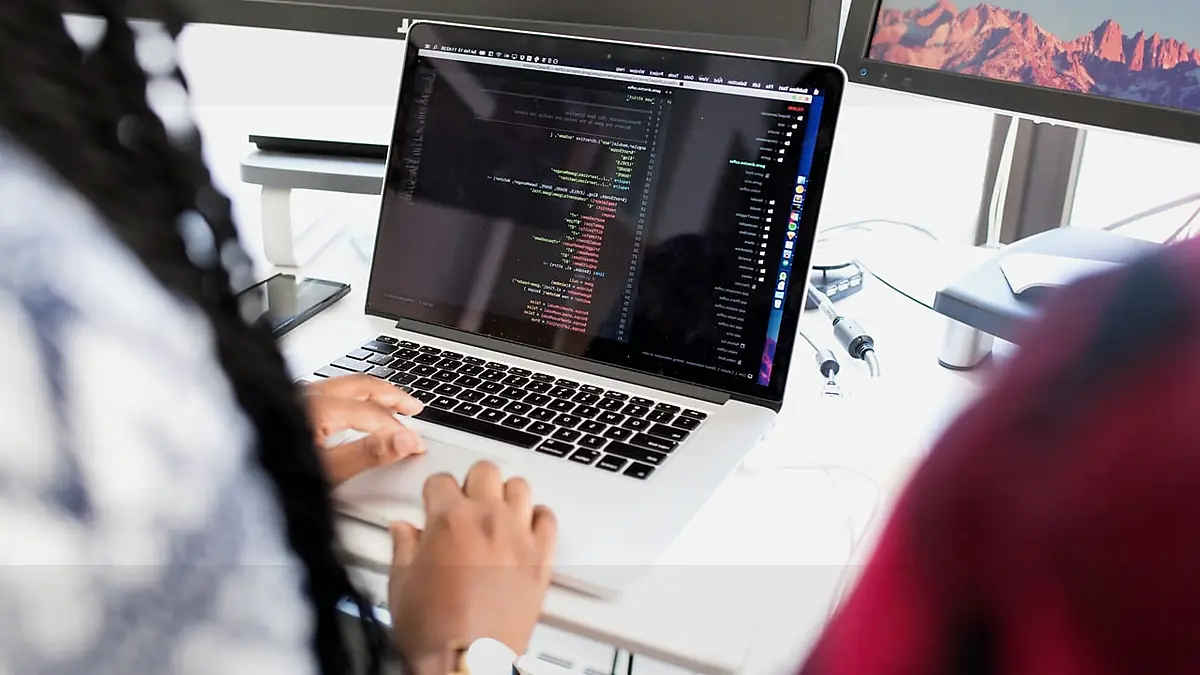
Introduction to Claude Security
Cybersecurity has become a major concern for small and medium-sized enterprises (SMEs) in Switzerland. With the rise of digital threats, protecting data and systems is crucial. In this context, Anthropic has launched the public beta version of Claude Security, an AI-based tool designed to identify vulnerabilities in code and suggest fixes. But what does this innovation mean for Swiss SMEs — and why does it arrive at exactly the right moment?
The timing is not coincidental. According to the Swiss National Cyber Security Centre (NCSC) 2025 annual report, cyberattacks on Swiss SMEs increased by 38% year-on-year, with ransomware and supply chain attacks accounting for the majority of high-impact incidents. Traditional cybersecurity approaches — periodic audits, firewall rules, antivirus software — are increasingly inadequate against attackers who exploit application-level vulnerabilities in custom code, third-party integrations, and web-exposed services. This is precisely the gap that AI-powered vulnerability scanning fills.
The Cybersecurity Landscape in Switzerland
In Switzerland, cybersecurity is governed by strict regulations, notably the new Federal Act on Data Protection (nFADP), which requires companies to ensure the security of personal data they process. For SMEs, often lacking large IT departments, this poses a significant challenge. The threat of increasingly sophisticated cyberattacks can have devastating consequences, both financially and in terms of reputation.
Swiss SMEs face a compounding challenge: they are attractive targets (high purchasing power, valuable financial and industrial data) but typically lack the internal security expertise of larger organisations. The average Swiss SME has between 0.2 and 0.5 full-time equivalent dedicated to IT, with cybersecurity being one responsibility among many. Claude Security addresses this gap by making expert-level code vulnerability analysis accessible without requiring a dedicated security team.
Beyond the nFADP, Swiss SMEs operating in finance, healthcare, or as suppliers to federal or cantonal administrations face additional sector-specific requirements (FINMA circular 2023/1, cantonal health data standards). Claude Security's ability to flag regulatory compliance issues — not just generic vulnerabilities — makes it particularly relevant in these contexts.
How Claude Security Can Assist SMEs
Claude Security stands out for its ability to automatically analyse application source code to detect vulnerabilities. For Swiss SMEs, this means they can gain detailed insights into potential weaknesses without having to invest in costly human resources to conduct these audits manually.
The tool analyses code across multiple dimensions simultaneously: known CVE patterns, insecure function usage, hardcoded credentials, SQL injection surfaces, authentication weaknesses, and dependency vulnerabilities in third-party libraries. Each finding is presented with a severity rating, a plain-language explanation of the risk, and one or more suggested remediation options — making the output actionable for a developer without specialist security training.
Automatic Detection and Repair
One of the major advantages of Claude Security is its ability not only to detect vulnerabilities but also to suggest fixes. This significantly reduces the time needed to address potential weaknesses, allowing SMEs to maintain a high level of security without interrupting their operations.
Where traditional static analysis tools produce a list of findings that require a security specialist to interpret and prioritise, Claude Security provides contextualised remediation. A developer at a Swiss SME who has never studied application security can receive a finding, understand why it is dangerous, and implement the suggested fix — all within a single tool interface. This democratises security remediation in a way that genuinely changes the economics of SME cybersecurity.
Continuous Monitoring and Shift-Left Security
Beyond point-in-time audits, Claude Security supports integration into CI/CD pipelines, scanning code at every commit or pull request. This "shift-left" approach catches vulnerabilities before they reach production, rather than discovering them after deployment — when remediation is significantly more expensive and the exposure window may already have passed.
For Swiss SMEs running custom web applications, internal tools, or integrations between SaaS platforms, continuous scanning means the security posture improves with every development sprint rather than degrading between annual audits.
Accessibility and Ease of Use
Unlike other solutions on the market, Claude Security is designed to be accessible even to non-technical users. Its user-friendly interface allows SMEs to easily integrate it into their existing processes, which is essential for businesses without cybersecurity expertise. The dashboard provides an executive summary view — overall risk score, top priority findings, trend over time — alongside the detailed technical findings, allowing both management and developers to understand the security posture at their respective levels of detail.
Integration into the Swiss Market
The Swiss market, with its high concentration of SMEs in various sectors such as finance, retail, manufacturing, and professional services, is particularly well-placed to benefit custom project scope. By reducing the risk of data breaches and attacks, companies can not only comply with the nFADP but also gain their customers' trust — an increasingly important differentiator in a market where data handling is scrutinised.
Swiss SMEs that handle data for EU-based clients must also comply with GDPR, which requires "appropriate technical and organisational measures" to protect personal data. Regular AI-powered vulnerability scanning, with documented findings and remediation actions, constitutes exactly the kind of evidence that satisfies both GDPR and nFADP audit requirements.
Adaptation to Local Standards
Claude Security is designed to adapt to local compliance requirements, which is an asset for SMEs seeking to align their security practices with Swiss regulations. This includes access management, protection of sensitive data, and preparation for security audits. The tool's reporting features generate audit-ready documentation — a full vulnerability history, remediation actions taken, and current risk status — that can be presented to insurers, clients conducting supplier due diligence, or cantonal data protection authorities.
Practical Advice for SMEs
Risk Assessment: Start with a comprehensive assessment of your systems to identify the most vulnerable areas. Prioritise customer-facing applications and any system processing personal data — these carry the highest regulatory and reputational exposure.
Staff Training: Ensure your employees are trained in good cybersecurity practices, as security often begins with effective human resource management. Phishing simulation exercises and basic secure coding training complement tool-based scanning.
Gradual Implementation: Integrate Claude Security gradually to allow your team to adapt to new tools and processes. Start with your most critical application, resolve the findings, then expand coverage systematically.
Continuous Monitoring: Use Claude's continuous monitoring capabilities to stay informed about new threats and security updates. Security is not a one-time project; it requires ongoing attention as code evolves and new vulnerabilities are discovered in third-party dependencies.
Three Swiss SME Success Stories
A Geneva-based fintech startup (23 employees)processing payments for SME clients integrated Claude Security into their GitHub CI/CD pipeline. Within the first scan, 14 medium-severity and 3 high-severity vulnerabilities were identified in their payment processing module — including two SQL injection surfaces that had been present for over a year. All 17 were remediated within two weeks. The FINMA-aligned security audit that followed cleared without findings for the first time, enabling a contract renewal with a cantonal banking client worth custom project scope per year.
A Winterthur-based industrial software firm (41 employees)used Claude Security to audit a legacy internal ERP system built in-house over 10 years. The audit surface was 85,000 lines of code — the kind of scope that would cost custom project scope to 60,000 for a manual penetration test. Claude Security completed the analysis in under 4 hours, identifying 8 critical vulnerabilities including hardcoded database credentials and insecure direct object references. Total remediation effort: 3 developer-days. Estimated cost avoidance custom project scope.
A Lausanne-based HR technology SME (19 employees)processing employee data for 200+ client companies deployed Claude Security as a quarterly audit tool. After three quarters of continuous improvement guided by findings, their overall risk score dropped by 67%. Two enterprise clients that had previously held back on expanding their contract due to security concerns signed expanded agreements, contributing custom project scope in additional annual recurring revenue — directly attributed by the clients to the documented security improvements demonstrated through Claude Security reports.
FAQ: Claude Security for Swiss SMEs
Q: Does Claude Security require access to our production systems or databases?No. Claude Security analyses source code only — it does not require network access to your live systems, databases, or infrastructure. You provide the code (via a repository connection or file upload), and the tool analyses it statically. This means there is no risk of disruption to production systems and no requirement to expose sensitive environments during the analysis.
Q: How does Claude Security handle the confidentiality of our source code?Anthropic processes submitted code under enterprise data handling terms that prohibit use of your code for model training. For Swiss SMEs with strict intellectual property concerns, Claude Security can also be deployed in a private cloud configuration, keeping all code analysis within a specified geographic boundary. For the most sensitive codebases, an on-premise deployment option is available for enterprise clients.
Q: How does AI-powered vulnerability scanning compare to hiring a cybersecurity consultant?The two are complementary, not substitutes. A human penetration tester brings business logic understanding, social engineering simulation, and creative attack thinking that automated tools cannot replicate. However, AI-powered scanning covers the full codebase continuously, at a fraction of the cost of periodic manual engagements, and catches the majority of technical vulnerabilities (OWASP Top 10, dependency CVEs, configuration errors) before a human tester even begins. For Swiss SMEs, the recommended approach is: use Claude Security for continuous automated scanning, and engage a qualified penetration tester for an annual or bi-annual deep assessment focused on business logic and architecture-level risks.
Voir aussi: Embracing Passwordless Authentication in Swiss SMEs
Ready to transform your SME with AI?Contact our experts for a free 30-minute audit.
Method and reliability
This guide is connected to IAPME Suisse pillar pages and the most useful references for Swiss SMEs.
- Swiss federal sources for regulation, data, innovation and cybersecurity.
- Recognized consulting firms for AI adoption, agents and governance.
- Internal links to business guides so the reading path stays focused on SME use cases.
Reference sources
- Swiss SME Portal - artificial intelligence
Swiss federal source on AI opportunities for SMEs.
Federal source
- Swiss SME Portal - SME digitalization
Federal reference on digital transformation and Swiss SME competitiveness.
Federal source
- FDPIC - current data protection law applies to AI
Swiss federal authority confirming that data protection law applies to AI processing.
Federal source
- Innosuisse - Swiss Innovation Agency
Federal source for innovation, R&D and knowledge transfer in Switzerland.
Federal source
- NCSC - National Cyber Security Centre
Swiss federal reference for cybersecurity, phishing, fraud and digital resilience.
Federal source
- Google Search Central - helpful, reliable content
Official reference for useful, sourced, people-first content.
Official source
- Google Search Central - generative AI search
Official Google guidance for visibility in Search and generative experiences.
Official source
- European Commission - AI regulatory framework
Institutional reference for AI governance, transparency and obligations in Europe.
Official source
Find our AI agency in your city
Contact
Tell us about your AI project
Share your goal, company context and the workflows you want to automate. We will answer with a clear next step.
- 1Votre contexte
- 2Le besoin à traiter
- 3Une prochaine étape claire