
Autonomous AI agents for Swiss SMEs: strategic guide 2026
Everything about autonomous AI agents for Swiss SMEs: difference custom project scope, Claude/GPT/Mistral frameworks, use cases in retail and services, Swiss FADP/AI Act compliance, real ROI.
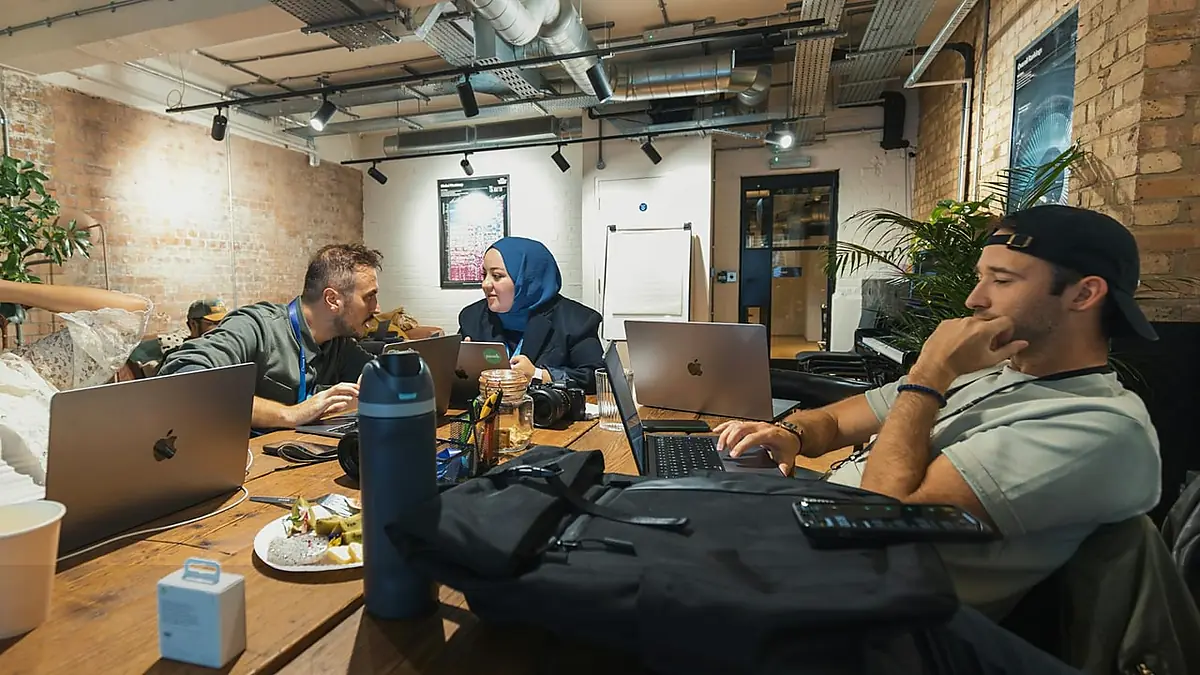
Autonomous AI agents for Swiss SMEs: strategic guide 2026
In 2026, the term«autonomous AI agent»is replacing «chatbot». The difference is not cosmetic: a chatbot answers questions, an AI agent executes multi-step tasks, makes decisions and coordinates multiple tools autonomously. For Swiss SMEs, this shift fundamentally changes the ROI of artificial intelligence.
This article is written for CEOs and digital managers of French-, German- and Italian-speaking Swiss SMEs who want to understandconcretely what AI agents can automate, at what cost, under what Swiss FADP constraints, and with what ROI.
This article complements ourpillar guide on AI automation for Swiss SMEs.
1. What is an autonomous AI agent?
Anautonomous AI agentis a program combining four capabilities:
- Natural language understanding(via an LLM such as Claude, GPT-4 or Mistral).
- Context memory(short-term in conversation, long-term in a database).
- Tool usage(web search, CRM reading, email sending, code execution).
- Multi-step planning: breaking down a goal into sub-tasks, executing them, verifying the result.
Difference custom project scope
| Criterion | Classic chatbot | Autonomous AI agent |
|---|---|---|
| Behaviour | Reactive (answers) | Proactive (acts) |
| Steps | One question = one answer | Goal = multi-step plan |
| Memory | None or short | Persistent |
| Tool access | Limited or none | Extended (CRM, ERP, web, API) |
| Typical use case | FAQ, basic info | Lead qualification, appointment booking, order tracking |
| Risk | Low (text replies) | Moderate (can act in the real world) |
For Swiss SMEs, adopting AI agents marks the shift fromsimple assistancetocognitive automation.
2. The three main categories of AI agents relevant to an SME
Sales agent
Tasks: qualify inbound prospects, enrich their data, score purchase intent, schedule follow-ups, hand warm leads to the human sales rep. For a Swiss B2B services SME, a sales agent can process2 to 5 times more leadswith no additional headcount.
Customer support agent
Tasks: receive a customer request (chat, email, voice), understand intent, retrieve CRM history, propose a solution, and escalate to a human only when needed. A retail or e-commerce SME can achieve60–70% of requests resolved without human intervention.
Operations agent (Ops agent)
Tasks: monitor business data (orders, invoices, inventory, alerts), detect anomalies, trigger corrective actions. For a fiduciary practice in Lausanne, an ops agent can monitor upcoming VAT deadlines, alert proactively and prepare client reminders.
3. AI agent frameworks available in 2026
LangChain and LangGraph
The open-source reference for orchestrating complex agents. Ideal for SMEs with a development team or a specialised AI partner. LangGraph (2025) adds state-graph management — essential for reliable multi-step agents.
CrewAI
A Python framework that thinks inagent teams: each agent has a role (researcher, writer, checker) and collaborates with the others. Well suited to marketing agencies, consultancies and editorial teams.
AutoGen (Microsoft)
A well-documented multi-agent conversation framework, integrated with Azure OpenAI. Relevant for Swiss SMEs already invested in the Microsoft 365 ecosystem who want to keep their data in a Swiss tenant.
Claude Agent SDK (Anthropic)
Launched in late 2024, this SDK enables building agents withClaude 4as the brain. Very effective for complex business tasks (contract analysis, multi-step reasoning, regulatory analysis).
Mistral Agents (Mistral AIcustom project scopee)
The quintessential European option. Mistral models can run either in a sovereign EU cloud or self-hosted via Ollama. For a Swiss FADP-aware SME, this combines performance with data localisation.
4. Typical architecture of an AI agent for a Swiss SME
A production-ready AI agent for an SME typically rests on 5 components:
- The LLM(Claude, GPT-4, Mistral) that thinks and decides.
- The orchestrator(n8n, LangGraph, Make) that executes actions.
- Vector memory(Qdrant, Weaviate or pgvector) for long-term context.
- Business tools(CRM, ERP, calendar, messaging, knowledge base).
- Guardrails(filters, business rules, human validation for sensitive actions).
The most effective combination for an SME in 2026:self-hosted n8n + Claude 4 + pgvector + Bexio/HubSpot + human validation on payments and signatures.
More on n8n:n8n self-hosted for Swiss SMEs.
5. Six concrete use cases in Swiss SMEs
Case 1 — Automated sales qualification (B2B services SME)
An agent receives the contact form, enriches data (company, size, sector), checks CRM history, scores lead quality, and schedules a follow-up or personalised email. Measured result:+45% qualified leadspassed to sales reps with no extra workload.
Case 2 — Multilingual AI phone reception (medical practice)
A voice agent in English, French, German and Italian handles patient calls, identifies the purpose (appointment, emergency, admin), accesses the practice management software, proposes a slot and confirms by SMS. Availability24/7. See alsoAI voice assistant for SMEs.
Case 3 — E-commerce order tracking
The agent monitors delivery statuses, anticipates delays, proactively updates customers in EN/FR/DE/IT, and offers a goodwill gesture when there is a problem. Result:-60% support tickets, +12% customer satisfaction.
Case 4 — Overdue invoice follow-up (fiduciary or B2B SME)
The agent identifies overdue invoices, checks customer history, generates an appropriately toned reminder (commercial, firm, legal), sends it and reschedules a follow-up. For a Swiss SME:-30 average debtor days. See alsoAutomating bookkeeping with AI.
Case 5 — Intelligent document research (law firm)
An agent that can query case-law databases, synthesise, compare and cite correctly. Estimated saving:8 to 14 hours per lawyer per weekon preparatory research.
Case 6 — Automated management reporting (30–100-person SME)
Every Monday morning the agent consolidates commercial, operational and financial KPIs custom project scope, generates an English-language report with analysis and emails it to management. Saving:3 to 5 hours per weekfor the controller or executive assistant.
6. Swiss FADP and AI Act compliance for AI agents
Transparency (Swiss FADP Art. 19)
Your clients must know that an AI agent is handling their request. A short sentence in the website footer and a clear greeting message at the start of any interaction are sufficient in most cases.
Human validation for high-stakes decisions
Art. 21 Swiss FADP requires that noautomated individual decisionwith significant legal or similar effect is taken without human intervention, unless the person concerned has given explicit consent. Concretely: an AI agent mayproposea credit refusal, but a human mustdecide.
7. Real ROI in a Swiss SME
Based on 12 projects accompanied by IAPME Suisse in 2024–2026 (SMEs with 5 to 50 employees, services and retail sectors):
- Time to production: 4 to 10 weeks depending on complexity.
- Direct time saved: 18 to 35 hours per week across the team affected.
- 12-month ROI: positive in 11 out of 12 cases.
8. Conclusion: 2026, the year of AI agents for Swiss SMEs
Autonomous AI agents are no longer a marketing promise in 2026: they are operational, tested, documented, Swiss-FADP-compliant tools with proven ROI. The real question for Swiss business leaders is no longer «should I?» but «where to start?»
Further reading
- Pillar guide: AI automation for Swiss SMEs (2026)
- Make vs n8n vs Zapier: comparison for Swiss SMEs 2026
- n8n self-hosted for Swiss SMEs: data sovereignty and Swiss FADP
- AI voice assistant for SMEs: complete guide
- EU AI Act and compliance for Swiss SMEs 2026
- Free AI audit for your SME{/* cocon-links:start */}
Pour aller plus loin
- AI-powered WhatsApp Business automation for Swiss SMEs{/* cocon-links:end */}
Method and reliability
This guide is connected to IAPME Suisse pillar pages and the most useful references for Swiss SMEs.
- Swiss federal sources for regulation, data, innovation and cybersecurity.
- Recognized consulting firms for AI adoption, agents and governance.
- Internal links to business guides so the reading path stays focused on SME use cases.
Reference sources
- Swiss SME Portal - artificial intelligence
Swiss federal source on AI opportunities for SMEs.
Federal source
- Swiss SME Portal - SME digitalization
Federal reference on digital transformation and Swiss SME competitiveness.
Federal source
- FDPIC - current data protection law applies to AI
Swiss federal authority confirming that data protection law applies to AI processing.
Federal source
- NCSC - National Cyber Security Centre
Swiss federal reference for cybersecurity, phishing, fraud and digital resilience.
Federal source
- Google Search Central - helpful, reliable content
Official reference for useful, sourced, people-first content.
Official source
- Google Search Central - generative AI search
Official Google guidance for visibility in Search and generative experiences.
Official source
- Google Search Central - Article structured data
Official reference for helping Google understand article titles, images and dates.
Official source
- Schema.org - BlogPosting
Standard vocabulary for describing a blog article and its citations.
Official source
Find our AI agency in your city
Contact
Tell us about your AI project
Share your goal, company context and the workflows you want to automate. We will answer with a clear next step.
- 1Votre contexte
- 2Le besoin à traiter
- 3Une prochaine étape claire